Constraints Overview
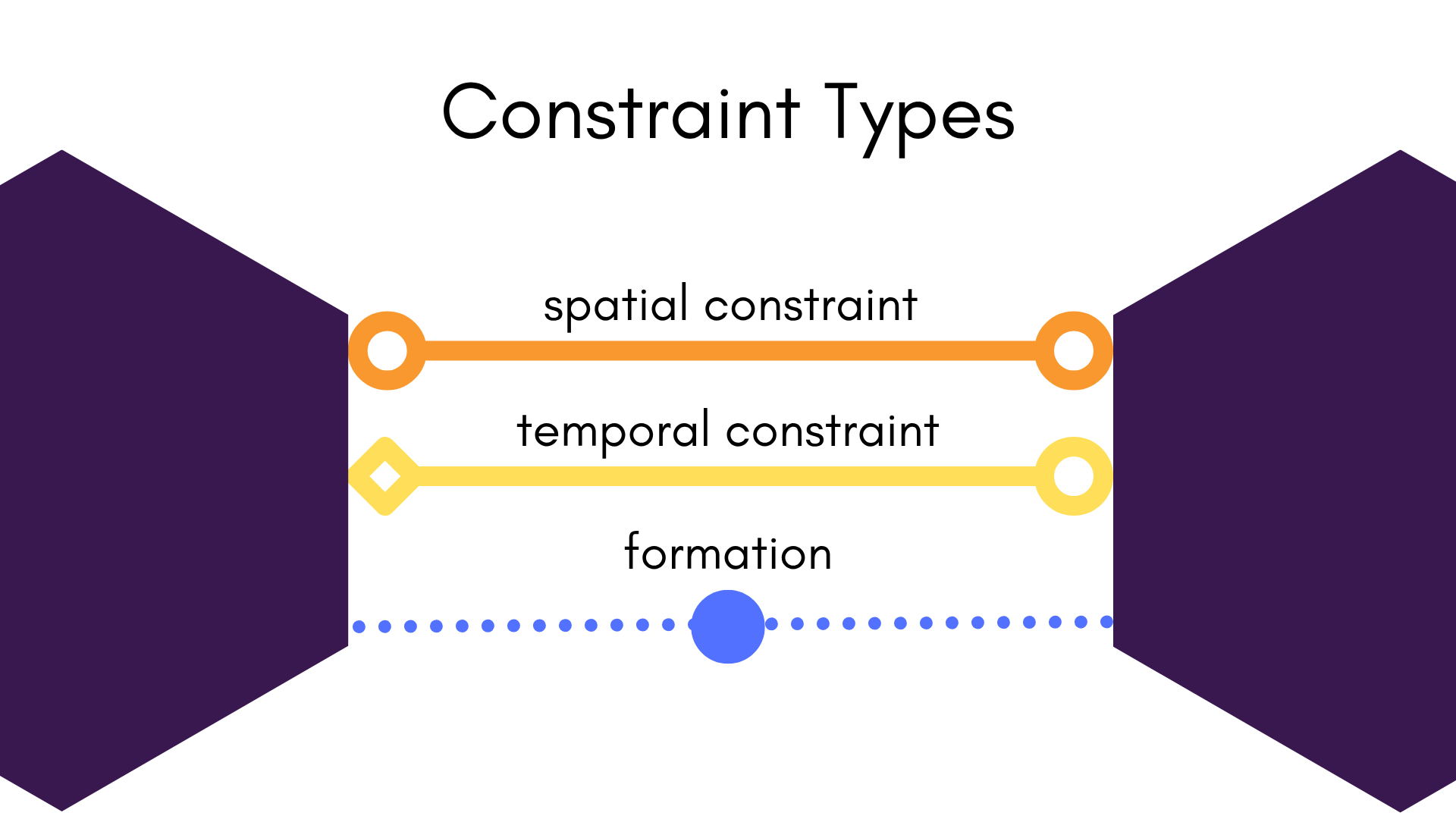
A constraint is a spatial relation, temporal relation, or formation between any two components. In the context of interpreting plexes as a multigraph of relationships over our system (comprised of different components), constraints are the edge-relationships of the graph.
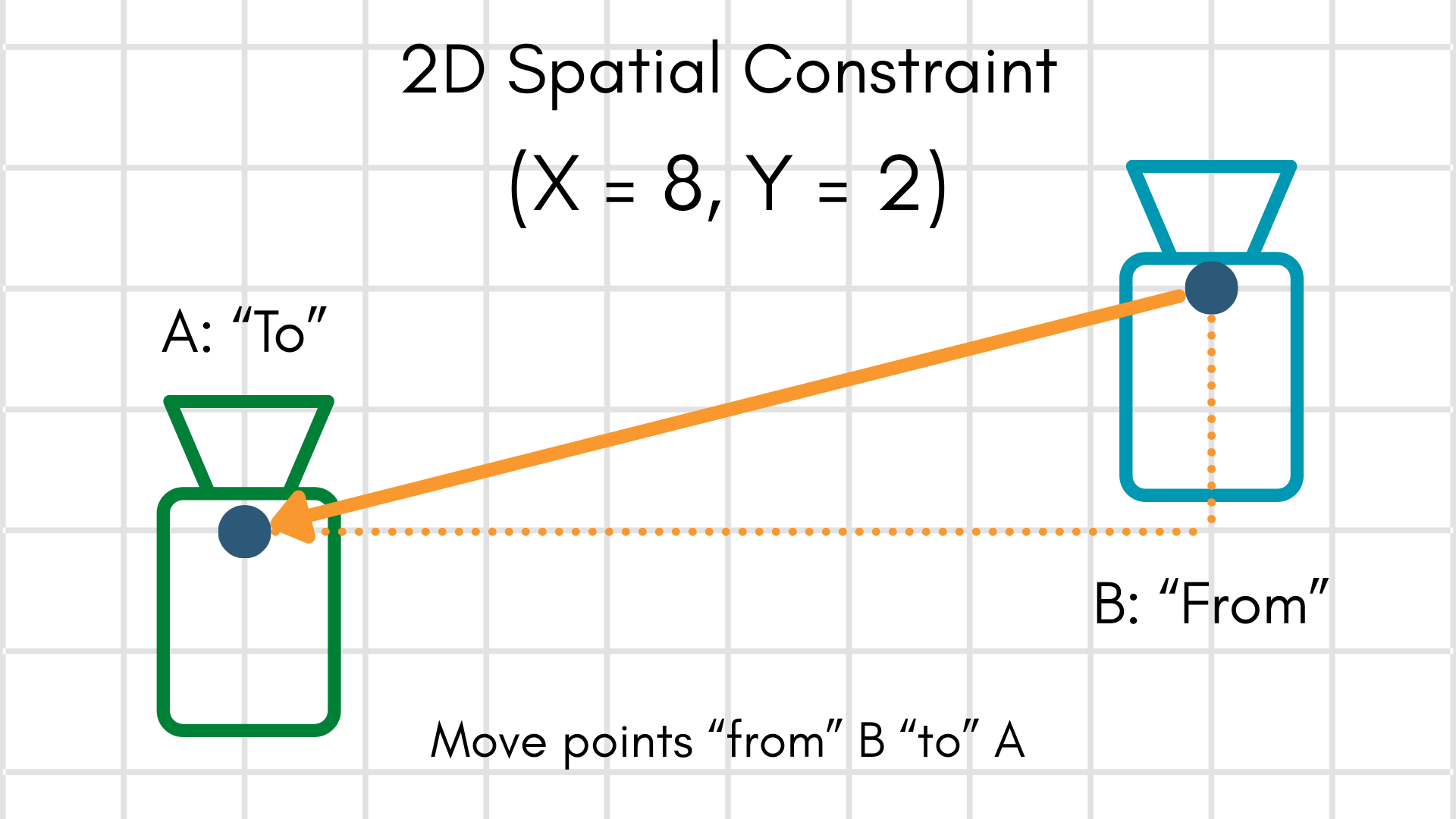
"To" and "From" Constraints
Aka "What is origin?", parent vs child, etc. etc.
Every constraint links exactly two components, identified by their UUIDs. One is labeled from and
the other to. This directionality tells us how to apply the constraint's data to move observations
into a common frame of reference, whether that's an extrinsics transform (spatial) or a
synchronization correction (temporal).
For spatial constraints, the extrinsics transform moves points from one coordinate frame to another. We write this as:
To transform a point from the frame of component into the frame of component :
Read this as " in 's frame equals the transform of from to ." In other words:
- The
tocomponent () is the "origin"; it owns the reference frame - the
fromcomponent () is the one whose points get transformed
The same directional logic applies to temporal constraints: synchronization data converts timestamps from 's clock into 's clock.